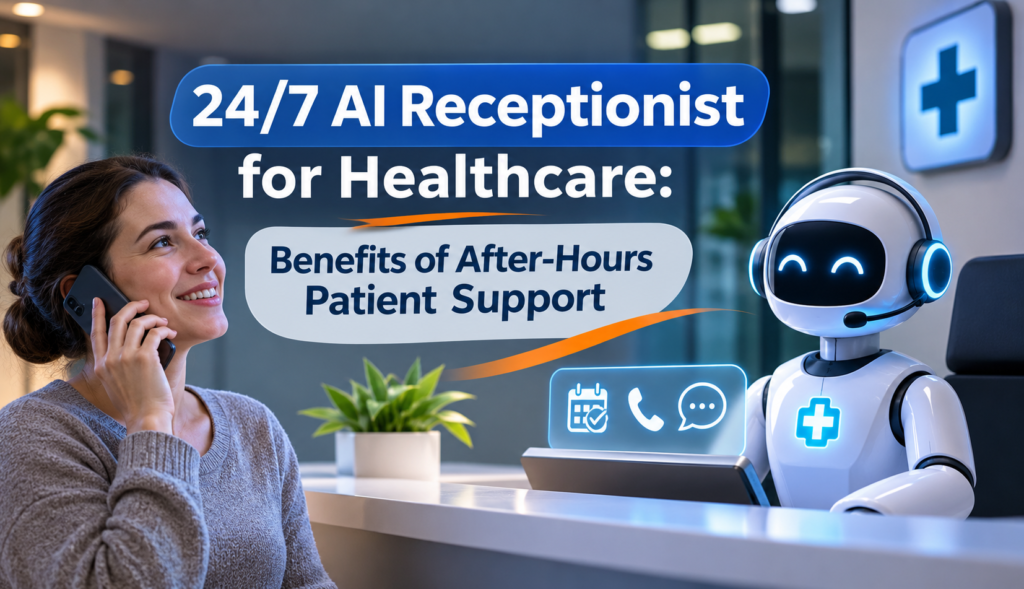
Healthcare practices receive patient calls throughout the day, but not every patient can contact a clinic during regular business hours. Some people want to book appointments late at night, ask about available services, or get answers to basic questions after work. When nobody answers these calls, patients may feel frustrated or contact another healthcare provider.
This is where a 24/7 AI receptionist can help. It allows healthcare practices to respond to patient enquiries even when the office is closed. It can answer common questions, collect contact details, and assist with appointment requests without requiring staff to be available around the clock.
For healthcare providers in the USA, after-hours patient support can improve communication, reduce missed opportunities, and create a better patient experience. Let’s explore its benefits and how healthcare practices can use this technology.
What Is a 24/7 AI Receptionist for Healthcare?
A 24/7 AI receptionist is a virtual assistant that uses artificial intelligence to manage patient communication. It can answer incoming calls, respond to messages, share practice information, and help with appointment-related requests.
Unlike a traditional receptionist, it does not follow fixed office hours. It can support patients during evenings, weekends, and holidays.
For example, imagine a patient who wants to schedule a consultation at 9 PM. The clinic is already closed, but the AI receptionist can collect the patient’s details and guide them through the next steps.
How Does It Work?
An AI receptionist uses artificial intelligence and natural language processing to understand questions and provide relevant responses.
Depending on the system, it can:
- Answer common questions about the practice.
- Share opening hours and location details.
- Help patients request or book appointments.
- Collect basic contact information.
- Respond to frequently asked questions.
- Direct complex enquiries to staff members.
- Send appointment confirmations and reminders.
These features help healthcare practices manage communication more efficiently.
Why Is After-Hours Patient Support Important?
Patients have different schedules and responsibilities. Some work long hours, while others manage family commitments or have limited time during the day.
When a clinic cannot respond after hours, it may miss opportunities to connect with potential and existing patients.
Here are three reasons why after-hours support matters.
1. Patients Need Flexible Communication
Not every patient can contact a clinic between 9 AM and 5 PM. Some may want to book appointments after work or ask questions while planning their next visit.
After-hours support gives patients more flexibility and makes contacting a healthcare practice easier.
2. Missed Calls Can Mean Missed Appointments
When patients call and nobody answers, they may not always call again. Some might contact another clinic that responds faster.
An AI receptionist can answer supported enquiries when the front desk is unavailable, helping practices capture more appointment requests.
3. Quick Responses Build Patient Confidence
Patients appreciate clear and timely communication. Even a simple answer about opening hours or available services can improve their experience.
Providing helpful responses after hours shows patients that their enquiries matter.
7 Key Benefits of Using a 24/7 AI Receptionist in Healthcare
A 24/7 AI receptionist offers several advantages for healthcare practices looking to improve patient communication and manage daily operations.
1. Provides Support Around the Clock
One of the biggest benefits is continuous availability. Patients do not have to wait until the next business day to ask basic questions or submit appointment requests.
For example, someone who wants to know whether a clinic accepts new patients can make an enquiry late at night and receive an approved response.
This makes healthcare practices more accessible.
2. Reduces Missed Patient Enquiries
A busy front desk may receive several calls at once. Staff members might be helping patients, handling paperwork, or speaking with other callers.
As a result, some calls may go unanswered.
A 24/7 AI receptionist can manage incoming enquiries when staff members are busy or unavailable. It can collect contact details and record requests for follow-up.
This helps practices connect with more potential patients.
3. Makes Appointment Booking Easier
Booking an appointment should be simple and convenient. However, patients may struggle to reach a clinic during busy hours.
An AI receptionist can help patients request appointments or book available slots when connected to the practice’s scheduling system.
It can also provide appointment instructions and confirmations, depending on its features.
4. Saves Time for Healthcare Staff
Receptionists handle many responsibilities, including answering calls, managing appointments, updating records, and assisting visitors.
These tasks can become difficult when call volumes increase.
AI automation can handle repetitive questions, allowing staff members to focus on responsibilities that need personal attention.
5. Improves the Patient Experience
Patients want clear answers, convenient booking options, and timely assistance.
A 24/7 AI receptionist helps provide consistent communication, even when the clinic is closed. Patients can access basic information without waiting for someone at the front desk.
This creates a more convenient experience.
6. Supports Healthcare Practice Growth
As a healthcare practice grows, incoming calls and patient enquiries may also increase.
An AI receptionist can help manage routine conversations without requiring staff to handle every interaction manually.
It can also capture enquiries outside business hours, making it easier for practices to follow up with potential patients.
7. Maintains Consistent Communication
Patients may contact a practice through different channels and at different times.
An AI receptionist can provide consistent answers using approved practice information. It can also collect enquiry details so staff members can review and respond when they return.
This reduces the chances of overlooking important enquiries.
How Can Healthcare Practices Use AI Receptionists After Hours?
Healthcare practices can use AI reception systems for several everyday communication tasks.
Answering Frequently Asked Questions
Patients often ask about:
- Clinic opening hours and location.
- Available healthcare services.
- New patient registration.
- Appointment policies.
- Accepted payment methods and insurance information.
An AI receptionist can answer these questions using information provided by the practice.
Handling Appointment Requests
Patients can request appointments outside regular office hours. Depending on system integration, the AI receptionist can check available slots or record requests for staff follow-up.
Collecting Patient Information
An AI system can collect basic details, such as a patient’s name, contact number, and reason for calling, where appropriate.
This helps staff understand enquiries and respond more efficiently.
Directing Urgent Enquiries
Healthcare concerns require careful attention. An AI receptionist should follow clear escalation instructions and direct patients to appropriate human support or emergency services when necessary.
It should never replace medical professionals or attempt to diagnose patients.
What Should Healthcare Practices Consider Before Choosing an AI Receptionist?
Before introducing an AI receptionist, healthcare practices should consider a few important factors.
Data Privacy and Security
Healthcare practices handle sensitive patient information. Any AI system should support appropriate privacy and security safeguards.
Practices should review how the system stores and processes patient information and whether it meets relevant HIPAA requirements.
Easy Integration
The system should work smoothly with existing phone systems, appointment software, and communication tools.
Good integration helps reduce manual work and makes everyday operations easier.
Human Support
Not every patient question can be answered automatically. Choose a system that allows patients to reach staff members when they need personal assistance.
Natural Communication
An AI receptionist should use simple, polite, and easy-to-understand language. Patients should feel comfortable asking questions and receiving responses.
Final Thoughts
Patient support should not stop when a healthcare practice closes for the day. Patients may still need information, appointment assistance, or a convenient way to contact their preferred provider.
A 24/7 AI receptionist helps healthcare practices stay accessible, manage incoming enquiries, reduce missed calls, and simplify appointment requests. It also gives front-desk staff more time to focus on patients who need personal attention.
At Reply Amp, we help healthcare practices explore smarter communication solutions that support patient engagement and daily operations. Our Healthcare AI Receptionist solutions can help your practice manage enquiries, improve responsiveness, and provide a more convenient patient experience beyond regular office hours.
Ready to make your healthcare practice more accessible? Connect with Reply Amp and discover how AI-powered reception support can help your practice stay connected with patients 24/7.